Racked Against the Storm: Why Wind Load Engineering Is Becoming the Make-or-Break Variable in Coastal Solar Development
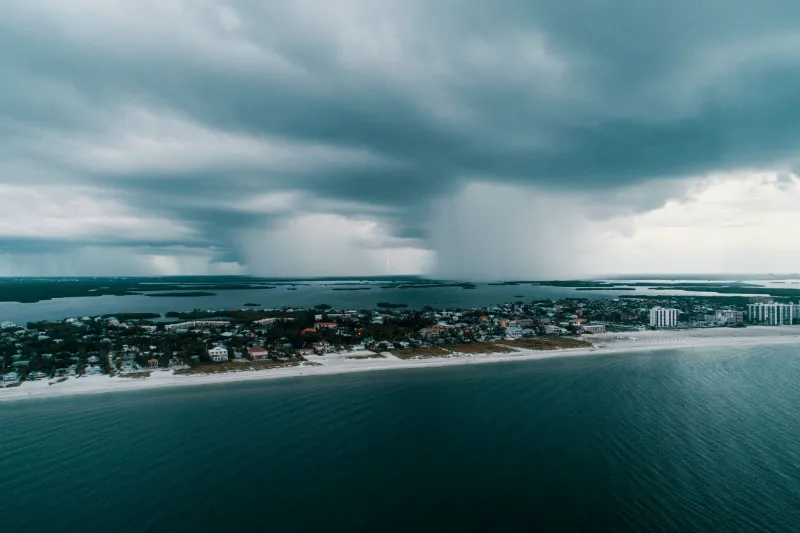
For years, wind loading was treated as a secondary concern in solar project design—something addressed late in the engineering process, resolved with a quick reference to ASCE 7 tables, and then filed away. In hurricane-prone markets stretching from the Florida Panhandle to the Gulf Coast of Texas, and increasingly across tornado-vulnerable corridors in the Midwest and Southern Plains, that approach is generating consequences that show up in post-storm damage reports, insurance claim denials, and project financing complications that developers rarely see coming.
The engineering profession is recalibrating. Wind load analysis has moved from a compliance formality to a core design variable—one that shapes racking specifications, foundation engineering, module selection, and ultimately, the financial viability of an installation over its operating life.
The Physics That Planners Underestimate
Solar arrays present a uniquely challenging aerodynamic profile. Unlike buildings, which are solid structures, panel arrays are semi-permeable surfaces elevated above a substrate—whether rooftop or ground plane—at angles specifically designed to intercept incoming energy. That geometry also intercepts wind with considerable efficiency.
The aerodynamic forces acting on a solar installation are not static. They include positive pressure on windward surfaces, negative pressure (uplift) on leeward surfaces, and complex edge and corner effects that can produce localized loads significantly higher than the mean field values. In hurricane conditions, these forces are further complicated by turbulence, wind direction variability, and the potential for debris impact loading. Traditional design approaches that apply uniform pressure coefficients across an entire array tend to underestimate peak loads at the perimeter—precisely where failures initiate.
AASCE 7-22, the current edition of the standard governing wind load design for most US jurisdictions, introduced refined pressure coefficients for solar installations that better capture these localized phenomena. However, the standard's applicability depends heavily on accurate wind speed mapping and the correct identification of exposure categories—both of which require professional judgment that automated permit tools sometimes shortcut.
Where Simulation Tools Are Changing the Calculation
The emergence of computational fluid dynamics (CFD) simulation as an accessible design tool is fundamentally altering what engineers can know about wind behavior before a single post is driven. Previously confined to aerospace and structural engineering applications requiring specialized expertise and significant computing resources, CFD modeling has become increasingly available through cloud-based platforms that integrate with standard solar design workflows.
These tools allow designers to model wind flow across complex terrain features—coastal bluffs, building parapets, irregular rooflines—and observe how pressure distributions develop across an array under varying wind angles and speeds. The output is not a single load value but a spatial map of pressure coefficients that can be applied directly to structural analysis, producing a more accurate and often more defensible engineering basis than code lookup tables alone.
In practice, this capability is surfacing design vulnerabilities that simplified methods miss. Arrays designed to minimum code compliance in ASCE 7 Wind Zone D regions may pass plan review but still exhibit elevated failure risk at specific panel positions when subjected to CFD analysis. The corrective actions—additional fastener density at perimeter rows, upgraded clamp specifications, modified tilt angles, or revised array geometry—are often modest in cost when incorporated at the design stage. Retrofitting them after a storm event is another matter entirely.
The Cost-Benefit Reality of Overbuilt Mounting Systems
The phrase "overbuilt" carries a misleading connotation in wind-exposed solar markets. What developers sometimes characterize as unnecessary structural conservatism often represents the minimum engineering margin required to maintain system integrity through a single major weather event.
The economic analysis is more nuanced than it appears on a cost-per-watt basis. A mounting system upgrade that adds $0.04 to $0.08 per watt to installed cost—a figure commonly cited for heavy-gauge racking or enhanced anchor configurations—looks different when evaluated against the full cost of a wind-related failure. That failure cost includes not only hardware replacement and labor but also lost production revenue during downtime, potential structural damage to the underlying roof or ground infrastructure, insurance deductible exposure, and the reputational consequences for the installer or EPC contractor.
Insurance underwriters are paying close attention to this arithmetic. Several major insurers covering commercial and utility-scale solar assets in coastal states have begun requiring engineering documentation of wind load compliance—not the stamped permit drawings, but the underlying calculation basis—as a condition of coverage. Projects that cannot demonstrate analysis beyond minimum code compliance are facing premium adjustments or coverage exclusions that materially affect project-level returns.
For developers operating in Florida, Louisiana, the Carolinas, or along the Texas Gulf Coast, the underwriting environment has shifted enough that wind load engineering methodology is now a legitimate topic in project financing discussions.
Rethinking Tilt, Orientation, and Array Geometry
Beyond racking specifications, advanced wind analysis is prompting reconsideration of fundamental array design choices. Tilt angle, which is typically optimized for energy yield, also governs the aerodynamic force profile of an installation. Shallower tilt angles generally reduce uplift forces on ground-mount arrays, though the relationship is nonlinear and site-specific. In high-wind zones, the energy yield penalty associated with a reduced tilt may be substantially smaller than the structural cost savings and risk reduction achieved.
Orientation relative to prevailing storm wind directions is similarly relevant. Arrays that present their long axis perpendicular to dominant hurricane approach vectors experience different load distributions than those oriented parallel. CFD analysis can quantify this relationship for specific sites, enabling designers to make informed trade-offs between yield optimization and structural performance.
Row spacing, which affects both shading losses and inter-row aerodynamic interference, also has wind load implications. Tightly spaced rows can create channeling effects that amplify wind speeds between panels, while wider spacing may reduce these effects at the cost of increased land use. The interaction between these variables is difficult to resolve without computational modeling.
The Regulatory and Standards Landscape
Jurisdictional variation in wind load requirements adds a layer of complexity for developers operating across multiple US markets. Florida's Building Code, which incorporates high-velocity hurricane zone provisions, imposes requirements that exceed ASCE 7 minimums in significant ways. Texas lacks a statewide building code for most unincorporated areas, creating a patchwork of municipal requirements that may or may not adequately address wind exposure. Gulf Coast parishes in Louisiana have adopted post-Katrina code revisions that are still being implemented inconsistently across the state.
For engineers and developers working across these markets, maintaining current knowledge of jurisdictional requirements—and understanding where those requirements may be insufficient relative to actual risk—is a professional obligation that design software alone cannot fulfill. Tools that automate code compliance checking are valuable, but they operate on the assumption that the applicable code is adequate. In wind-exposed markets, that assumption deserves scrutiny.
Designing for the Storm That Will Arrive
The actuarial reality of solar asset management in hurricane-prone markets is straightforward: over a 25-year operating life, a coastal installation in the southeastern US will almost certainly experience at least one significant wind event. The engineering question is not whether to design for that event but how precisely to characterize it and how much structural margin to maintain against it.
The tools to perform that analysis rigorously are available, increasingly affordable, and demonstrably capable of identifying vulnerabilities that simplified methods miss. The developers and engineers who integrate advanced wind load simulation into their standard design workflow are not overcomplicating the process—they are accounting for a variable that has always been present but was previously too expensive to model accurately.
In a market where insurance premiums, financing terms, and long-term asset performance are all converging on the same question of structural adequacy, wind load engineering is no longer an afterthought. It is where the design conversation should begin.