Rebuildable by Design: Making Solar Production Models Survive the Deal Room
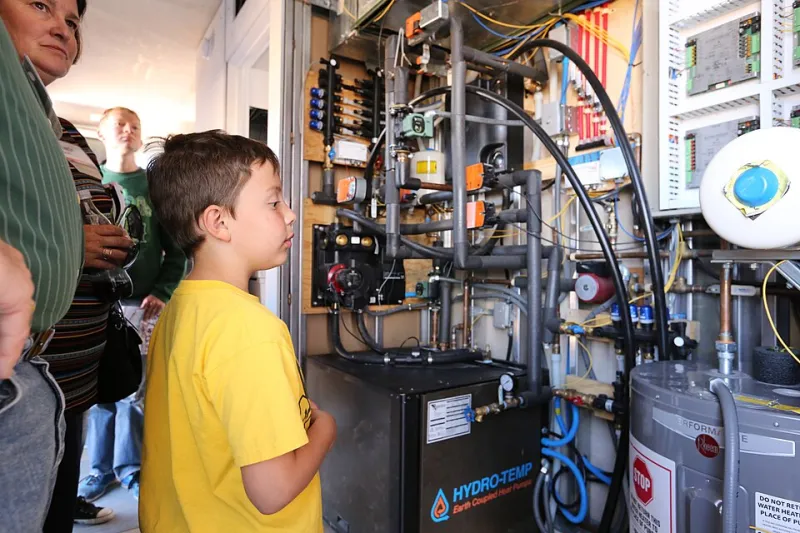
Photo: Dept of Energy Solar Decathlon from Denver, CO, Public domain, via Wikimedia Commons
A solar production model has traditionally traveled through a project's life as a polished deliverable: a PDF report, a spreadsheet summary, perhaps a screenshot of a layout. That was adequate when a project stayed with its original developer from feasibility through financing. In 2026, it is increasingly inadequate. Portfolios are sold, tax equity partners rotate, lenders re-underwrite, and utilities revisit assumptions years after an interconnection request was filed. In each case, the same question appears: can this production estimate be rebuilt exactly as it was submitted?
That question is no longer academic. A model that cannot be reproduced is difficult to defend in a negotiation, an audit, or a dispute. Reproducibility turns a design file from a static artifact into evidence.
From Deliverable to Evidence
The shift is easiest to see in transactions. A buyer reviewing a solar asset does not simply want a P50 number. It wants to know how that number was produced. Which weather file was used? Which module and inverter libraries were active? What version of the calculation engine ran the simulation? Were shading losses computed from a lidar surface, a satellite image, or a hand-drawn obstruction? If the seller cannot answer those questions with specificity, the buyer must either accept the risk or re-run the model from scratch.
Re-running from scratch is expensive, slow, and rarely produces the same answer. That is precisely the problem. If two competent engineers can produce different results from the same project, the model is not a reliable record. It is an interpretation.
What Makes a Solar Model Reproducible
Reproducibility does not require every firm to adopt software development practices wholesale. It does require treating the model as a system with identifiable inputs, a defined calculation environment, and a traceable output. At minimum, a reproducible solar design file should capture four categories of information.
First, the physical inputs: site geometry, array layout, tilt and azimuth, racking type, module and inverter specifications, string configuration, and obstruction data. Each should be tied to a source and a date.
Second, the environmental inputs: irradiance and weather data, albedo assumptions, soiling profiles, snow and temperature models, and any site-specific adjustments. Weather files are not interchangeable. A file downloaded in one month may not be retrievable in the same form two years later.
Third, the calculation environment: software name, version number, solver settings, loss assumptions, and any third-party libraries or data services used during the run. A model is only reproducible if the engine that produced it can be identified.
Fourth, the audit trail: who changed what, when, and why. Parameter changes should be attributable. A final report that shows only the last set of assumptions hides the reasoning that produced it.
The Anatomy of an Audit Trail
An effective audit trail is not a verbose log of every keystroke. It is a structured record of material decisions. For a solar project, material decisions include changes to module count, inverter loading ratio, setback distances, shading assumptions, degradation rates, and financial inputs such as escalation or curtailment.
A practical audit trail links each change to a reason and an owner. If an engineer adjusts soiling from 2 percent to 3.5 percent, the file should show the revised assumption, the supporting basis, and the date. If a layout is revised after a structural review, the model should preserve the prior version rather than overwrite it.
This is where version control becomes useful. Solar firms do not need to run a full software repository for every project, but they do need a disciplined versioning convention. A file named final_v7_really_final.pdf is not version control. A model identified by project, date, engine version, and change summary is.
Why Buyers Are Asking Now
Several pressures are converging. Asset portfolios are maturing, and operating histories are being compared against original production estimates. Incentive documentation and tax equity structures demand a clear chain of assumptions. Utilities are revisiting interconnection studies with greater rigor. And lenders have learned that a production number without a reconstructable basis is a liability.
The result is that due diligence teams are asking for model files, not just reports. They want to open the project, inspect the assumptions, and run the same calculation. If the seller cannot provide a reproducible package, the buyer may apply a conservative haircut, demand a warranty, or walk away.
A Practical File Standard
Firms can prepare for this scrutiny without waiting for a buyer's request. A workable standard includes a locked model archive at each major milestone: feasibility, preliminary design, interconnection submission, financing, and final construction. Each archive should contain the native project file, a manifest of external data sources, a parameter summary, and a change log.
The manifest matters more than it might appear. Weather data, map tiles, and component libraries are often delivered by external services that update without notice. Capturing the source, retrieval date, and version of those inputs is the difference between a model that can be rebuilt and one that can only be approximated.
Reproducibility is not a guarantee that a model is correct. It is a guarantee that the model can be examined. For solar assets entering a more demanding phase of ownership and finance, that distinction is becoming central to how design files are valued.