When Algorithms Optimize for the Screen: The Real-World Installation Gap in AI-Driven Solar Layout Tools
The promise of AI-powered solar design is straightforward and genuinely compelling: feed the algorithm a satellite image, a set of electrical parameters, and a financial objective, and receive in return a panel layout optimized for maximum energy yield within the constraints of the available roof area. For firms handling high volumes of residential proposals, the productivity gains are undeniable. Designs that once required thirty minutes of engineering attention can be generated in under two.
What the marketing materials are slower to acknowledge is what the algorithm is actually optimizing for—and what it is not.
Machine learning models trained on simulation outcomes learn to maximize the metrics that simulation environments reward: kilowatt-hours per year, specific yield, system losses from shading, and financial return figures derived from those energy numbers. These are legitimate engineering objectives. They are also incomplete ones. The physical act of installing the layout that the algorithm produces involves constraints that exist entirely outside the simulation environment—and that AI-driven tools, in their current state of development, are handling poorly.
The Roof Access Problem No Satellite Can Detect
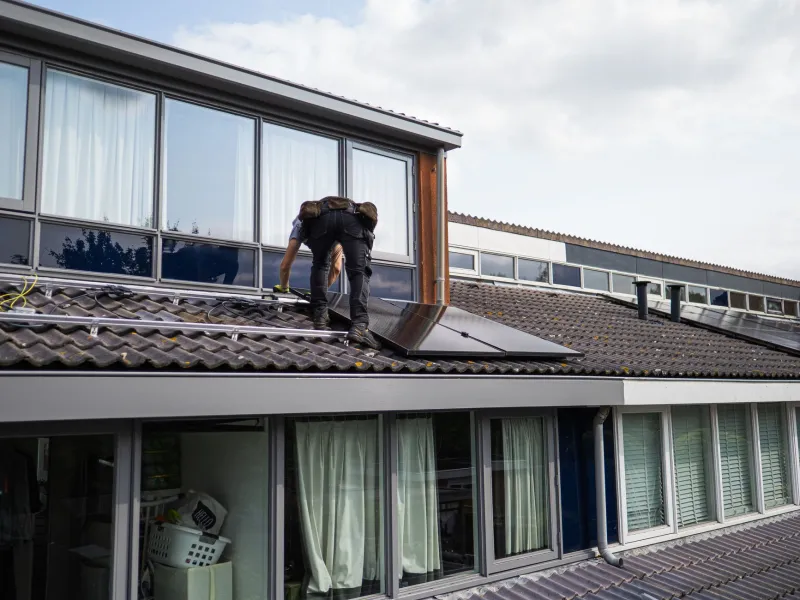
Installation crews work on roofs, not on screen renders. The practical geometry of physical access—where a crew member can safely stand, how materials can be staged and moved across a roof surface, where anchor points exist for fall protection systems—is not captured by the satellite imagery that feeds AI layout engines.
The consequences of this omission appear repeatedly in field reports from installation teams working with AI-generated designs. A layout that places modules in a tight grid pattern across the full usable area of a complex hip roof may maximize the simulated energy output. It may also leave no viable staging zone for panel delivery, no clear travel path for installers moving between array sections, and no practical location for electrical conduit routing to the array's collection point.
Experienced solar installers describe a recognizable pattern: the AI-generated layout looks like a solved puzzle—every piece fitted precisely, every square foot of viable roof area utilized. But a solved puzzle is not a workable installation plan. Real installation requires clearances, access routes, and staging areas that consume roof space without contributing to energy production. The algorithm, never having visited a roof, does not know this.
In markets where labor costs are high—California, the Northeast corridor, the Pacific Northwest—installation complications driven by impractical AI-generated layouts translate directly into cost overruns. A layout that requires four additional crew-hours to safely install than the one a human engineer would have designed is not an optimized layout. It is a layout that transferred design cost into installation cost, invisibly, at the point where it is hardest to recover.
Structural Load Distribution and the Limits of Geometric Optimization
AI layout tools typically incorporate a roof structural model—sometimes sophisticated, sometimes rudimentary—that governs where modules can be placed based on rafter spacing, roof age, and estimated load-bearing capacity. What these models rarely account for is the distribution of load across the roof structure as an integrated system.
A layout that maximizes panel count by concentrating modules in the structurally strongest sections of a roof may create a load distribution pattern that places asymmetric stress on the structure as a whole. In older residential construction—common in the Midwest and Southeast, where housing stock frequently dates to the 1960s and 1970s—this asymmetry can produce deflection and racking concerns that do not appear in the software model but that a structural engineer reviewing the installation plan would identify immediately.
The problem is amplified in markets with significant wind and snow load requirements. An AI-generated layout optimized for energy yield in a simulation environment using standard meteorological data may not adequately account for the specific wind pressure distribution that a particular roof geometry creates under extreme weather conditions. The algorithm knows the wind speed. It does not know how the roof shape channels that wind into localized pressure zones that affect specific sections of the array.
Electrical Routing: Where Geometric Elegance Meets Physical Reality
Perhaps the most consistent field complaint about AI-generated solar layouts concerns electrical routing practicality. Simulation environments are indifferent to the path that wires must travel between panels, combiners, inverters, and the point of interconnection. The algorithm assigns electrical configurations—string groupings, inverter placement, combiner box locations—based on electrical performance optimization. The physical path those connections must follow through the structure of the building is not part of the optimization problem.
The result, in numerous documented cases, is a layout in which the electrically optimal configuration requires conduit runs of implausible length, penetrations through structurally sensitive locations, or routing paths that violate local code requirements for exposed wiring. An inverter placement that minimizes DC wire losses in the simulation may locate that inverter in a garage corner that requires a 60-foot conduit run through finished living space to reach the main panel.
Human engineers performing manual layout design carry an implicit model of electrical routing practicality that is built from field experience. They know, without calculating it explicitly, that an inverter should be located near the main panel and on an accessible wall, that conduit should follow structural members where possible, and that penetrations through fire-rated assemblies require specific treatment. AI tools trained on simulation data have not been exposed to the field experience that generates this implicit knowledge—and the training sets used to develop these models do not reward routing practicality as a performance metric.
The Optimization Target Problem
The underlying issue is not that artificial intelligence is an inappropriate tool for solar design. It is that the current generation of AI layout tools has been trained on the wrong objective function—or, more precisely, on an incomplete one.
Simulation-based energy yield is a necessary component of solar layout optimization. It is not sufficient. A genuinely useful AI design tool would incorporate installation labor cost models calibrated to regional wage rates, structural load distribution analysis that accounts for whole-roof behavior rather than point loads, electrical routing feasibility scoring based on building geometry and code requirements, and roof access pathway preservation as a hard constraint rather than a secondary consideration.
Building training sets that reward these factors requires collaboration between software developers and the installation professionals who encounter the consequences of poor AI-generated designs every day. That collaboration is not yet systematically occurring. Until it does, the most responsible use of AI layout tools is as a first-pass proposal generator—a starting point for human engineering review rather than a finished design deliverable.
The algorithm's output looks like a solution. In too many cases, it is a problem that has been moved downstream.