When Geometry Becomes the Enemy: How Roofline Complexity Degrades Solar Design Performance
There is a moment familiar to nearly every commercial solar engineer: the project file opens, the 3D model begins to render, and the progress bar stalls. What follows is a familiar sequence of waiting, workarounds, and quiet frustration. The culprit is rarely the hardware and almost never the operator. More often, it is the geometry itself — and the compounding computational demands that modern roofline complexity places on simulation engines that were never designed with irregular surfaces in mind.
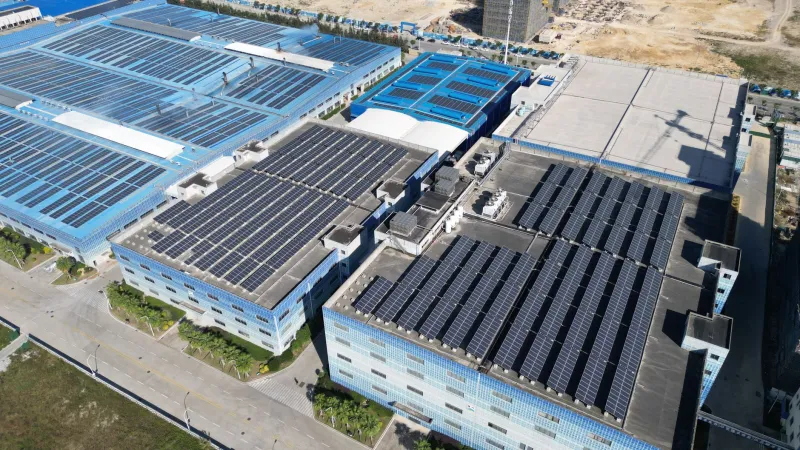
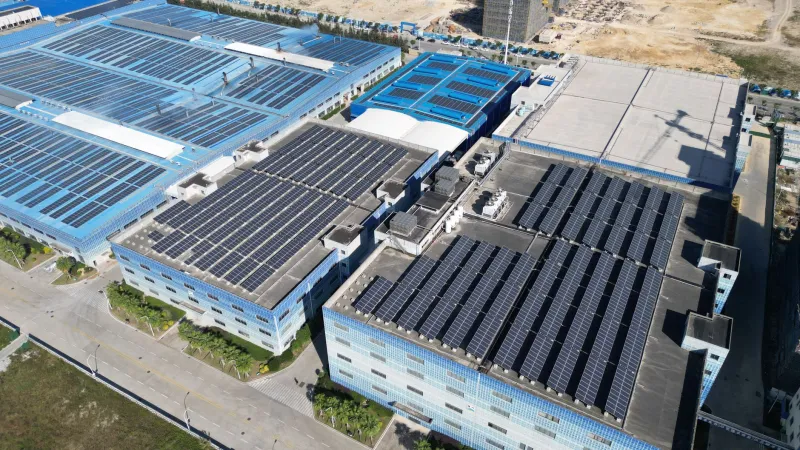
As commercial solar installations migrate toward increasingly intricate building envelopes — saw-tooth industrial roofs, multi-pitched retail centers, mixed-use developments with mechanical penthouse obstructions — the performance characteristics of design software have become a legitimate engineering concern. Runtime is no longer just an inconvenience. When simulation delays cascade across a project pipeline, they carry real financial consequences.
What Polygon Count Actually Does to a Simulation Engine
At the core of any 3D solar design tool is a geometric processing layer responsible for translating physical surfaces into computational objects. Every slope, ridge, parapet, and penetration is represented as a collection of polygons — discrete flat faces that approximate curved or irregular forms. The higher the polygon count required to represent a given surface accurately, the more computational cycles the engine must execute before a single irradiance value is calculated.
This relationship is not linear. Doubling the polygon count of a roofline model does not simply double the simulation time. Because most commercial solar design platforms rely on ray-casting or ray-tracing algorithms to evaluate shading and irradiance at each point on the array, the interaction between geometric complexity and simulation runtime follows a more aggressive scaling curve. Each additional polygon becomes a potential intersection target for thousands of simulated solar rays, and the processing load compounds accordingly.
Mesh resolution compounds this further. When a platform automatically generates a simulation mesh over an imported surface, the density of that mesh — measured in nodes per square meter — determines both the spatial resolution of the energy output calculation and the number of discrete points the engine must evaluate. High-resolution meshes produce more accurate annual energy estimates, particularly on shaded or irregularly pitched surfaces, but they dramatically increase the computational burden on systems without dedicated GPU acceleration.
Where Common Platforms Begin to Struggle
Performance benchmarking across widely used solar design tools reveals a consistent pattern: platforms optimized for residential simplicity begin to exhibit meaningful slowdowns once a project exceeds approximately 150 distinct roof polygons. For context, a straightforward gable residential roof might require fewer than 20 polygons, while a mid-size commercial facility with multiple HVAC curbs, skylights, varied pitches, and parapet walls can easily surpass 400.
Platforms that rely primarily on CPU-based simulation pipelines — a category that includes several well-regarded tools in the US commercial market — tend to show the steepest degradation curves. Projects that require full annual simulation at hourly resolution, rather than a simplified peak-month approximation, can push runtimes into ranges that disrupt same-day proposal workflows.
Cloud-based platforms distribute some of this burden across remote server infrastructure, which can alleviate local machine constraints. However, cloud processing introduces its own latency variables: queue times during peak usage windows, data transfer overhead for large model files, and dependency on stable internet connectivity at the job site or engineering office. For firms working across rural US markets or on secure government contracts with network restrictions, cloud offloading is not always a viable solution.
Tools built on dedicated GPU rendering pipelines demonstrate considerably more resilience at high polygon counts, maintaining acceptable simulation runtimes even on geometrically complex commercial surfaces. The trade-off, in many cases, is a steeper hardware investment requirement and reduced accessibility for smaller engineering teams.
The Accuracy Trade-Off Engineers Are Actually Making
Faced with unacceptable runtimes, many engineers adopt informal simplification strategies — reducing polygon count by consolidating roof facets, lowering mesh resolution to accelerate simulation, or substituting simplified obstruction representations for detailed 3D models of mechanical equipment. These are rational responses to a real constraint, but they carry consequences that are not always explicitly acknowledged in the project documentation.
Simplifying a roofline to reduce polygon count introduces geometric approximation errors. On a straightforward flat roof, these errors may be negligible. On a saw-tooth or multi-pitched surface, even modest simplification can misrepresent the shading geometry between adjacent array sections, producing irradiance estimates that diverge meaningfully from field-measured values. When those estimates feed into a 20-year financial model, the compounding effect of a consistent 2 to 4 percent production overestimate can translate into significant discrepancies between projected and actual investor returns.
Lowering mesh resolution produces a parallel risk. Coarse meshes average irradiance values across larger surface areas, smoothing out the localized shading effects that precision mesh analysis would capture. In markets where net metering compensation structures reward peak-hour generation — a condition common across several US utility territories — underestimating partial shading during morning or afternoon hours can skew the financial model in ways that are difficult to detect without granular simulation data.
Practical Strategies for Managing Complexity Without Sacrificing Precision
The most effective approach to managing computational load in complex roofline environments begins before the simulation runs — at the CAD import and model preparation stage. Engineers who invest time in deliberate geometric cleanup, removing redundant vertices, consolidating co-planar faces, and standardizing polygon orientation, consistently report shorter simulation runtimes without meaningful loss of design accuracy.
Selective mesh resolution is another underutilized tool. Rather than applying uniform mesh density across an entire roof surface, platforms that support variable resolution settings allow engineers to apply high-density meshing only in areas where shading variability is highest — typically within two to three meters of ridgelines, parapet edges, and mechanical obstructions. Less geometrically active surface areas can tolerate lower mesh density without introducing significant accuracy penalties.
For firms regularly handling large commercial projects, a structured hardware evaluation is warranted. The performance differential between a workstation with a professional-grade GPU and a standard business laptop is not marginal in high-polygon simulation environments — it is frequently the difference between a two-minute and a twenty-minute simulation run. At scale, that gap has direct implications for how many projects an engineering team can advance through design review in a given week.
Finally, platform selection itself deserves scrutiny through a performance lens. When evaluating solar design tools, US engineering firms should request benchmark data on simulation runtimes at specific polygon counts representative of their typical project types. Vendor demonstrations conducted on simplified residential models do not reliably predict how a platform will perform on the complex commercial geometry that defines much of the professional market.
Treating Performance as a Design Variable
The computational constraints of solar design software are not a peripheral concern — they are an engineering variable with measurable impact on project quality and firm productivity. As commercial rooflines continue to grow more architecturally complex and financial models demand higher simulation fidelity, the gap between platforms optimized for performance under geometric stress and those that are not will become increasingly consequential.
Engineers and project managers who treat software performance as a first-order design consideration — rather than an IT afterthought — are better positioned to deliver accurate proposals on competitive timelines. In a market where speed and precision are both expected, the ability to navigate roofline complexity without sacrificing either is a genuine professional advantage.