Closing the Confidence Gap: How Data Science Is Making Solar Production Forecasts Actually Reliable
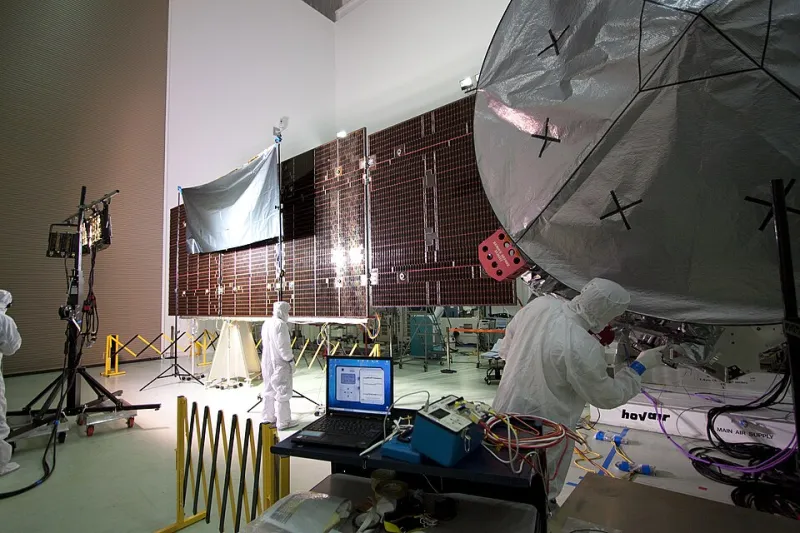
Photo: Photo credit: NASA/Jack Pfaller, Public domain, via Wikimedia Commons
Every solar engineer who has sat across from a project financier knows the moment: the modeled P50 figure is challenged, the assumptions behind the energy yield assessment are questioned, and the conversation pivots uncomfortably to uncertainty ranges. For decades, the gap between predicted and actual solar production has been one of the industry's most persistent structural problems — not because engineers lack rigor, but because the tools available to them were simply not built for the complexity of real-world conditions.
That dynamic is shifting. A new generation of analytics platforms, powered by machine learning inference engines and continuously updated weather datasets, is giving US solar professionals the means to construct production forecasts that hold up not just at financial close, but across the full operational life of a project.
Why Forecasts Fail: The Usual Suspects
Before examining the solutions, it is worth being precise about where conventional forecasting methodology breaks down.
The most commonly cited culprit is irradiance data quality. Most legacy energy yield models rely on satellite-derived or ground-station-interpolated solar resource datasets — tools like TMY3 files or NSRDB records — that represent long-run statistical averages. These datasets are valuable, but they smooth over the microclimate variability that can shift a project's actual yield by five to twelve percent relative to regional averages. A rooftop installation in coastal San Diego faces fundamentally different morning cloud dynamics than a site ten miles inland, yet a coarse weather grid may assign them identical irradiance profiles.
Equipment performance variance compounds the problem. Nameplate ratings are tested under Standard Test Conditions — 1,000 W/m² irradiance, 25°C cell temperature, and a specific air mass coefficient — that rarely describe conditions in the field. Module manufacturers publish tolerance bands, but those bands interact with real-world temperature coefficients, spectral variation, and soiling accumulation in ways that aggregate modeling tools frequently underestimate. A utility-scale array in Arizona's Sonoran Desert may see cell temperatures exceeding 70°C during peak summer hours, pushing actual output well below what STC-based calculations would suggest.
System-level losses round out the picture. Wiring losses, inverter clipping events, transformer inefficiencies, mismatch between modules within a string, and partial shading from seasonal vegetation growth or newly constructed neighboring structures all represent deductions from theoretical yield that are difficult to quantify precisely at the design stage. Industry-standard loss factor assumptions — often borrowed from prior similar projects — may not reflect site-specific realities.
Microclimate Blind Spots and the Limits of Historical Averages
One of the more underappreciated sources of forecast error is the mismatch between the temporal resolution of input data and the physical dynamics of energy production. Standard TMY datasets aggregate irradiance into hourly intervals. But cloud transients, which can reduce plane-of-array irradiance by 60 to 80 percent within seconds, operate on timescales that hourly averages obscure entirely.
For projects incorporating battery storage or grid services contracts, this temporal granularity gap is especially consequential. A forecast built on hourly averages may accurately predict total monthly generation while completely misrepresenting the intraday production profile — which is precisely what matters for dispatch optimization and revenue stacking calculations.
Geographic microclimates introduce additional complexity. The marine layer behavior along California's Central Coast, the orographic precipitation effects in the Appalachian foothills, the afternoon convective storm patterns across Colorado's Front Range — these phenomena are well understood qualitatively but have historically been difficult to encode into project-level yield models without significant manual adjustment by experienced engineers.
Where Machine Learning Enters the Equation
The application of machine learning to solar forecasting is not new in concept, but the accessibility and practical integration of ML-driven tools into professional design workflows has accelerated substantially over the past three years.
At the core of the most capable current platforms is a shift from purely physics-based simulation to hybrid architectures that blend physical modeling with statistical learning from historical performance records. Rather than relying solely on first-principles calculations, these systems train on observed generation data from thousands of operating installations — correcting for systematic biases in irradiance models, refining equipment performance curves based on fleet-wide field measurements, and learning the characteristic loss signatures of different system configurations.
The practical result is measurable. Firms that have integrated these tools into their pre-construction modeling workflows report forecast accuracy improvements in the range of fifteen to twenty-five percent relative to conventional software outputs, as measured against actual first-year generation data. That improvement translates directly into tighter P90 confidence intervals — a metric that lenders and tax equity investors increasingly scrutinize.
Real-time weather model integration has become a complementary capability. Platforms that ingest high-resolution numerical weather prediction outputs — including NOAA's HRRR model, which provides three-kilometer grid spacing across the continental US — can construct site-specific irradiance forecasts that capture mesoscale atmospheric dynamics invisible to coarser datasets. When these forecasts are fed back into yield models on a rolling basis, the result is a production estimate that evolves continuously rather than remaining static from the design phase onward.
Building More Defensible Financial Projections
The engineering and financial implications of improved forecast accuracy are closely linked. Project finance structures for utility-scale solar in the US typically require independent engineering reports that include P50 and P90 yield estimates. The spread between those two figures — the uncertainty band — directly influences debt sizing, debt service coverage ratios, and ultimately the cost of capital for the project.
A narrower, better-substantiated uncertainty range can meaningfully reduce financing costs. Engineers who can demonstrate that their yield methodology incorporates site-specific microclimate correction, ML-derived equipment performance adjustments, and statistically validated loss factor assumptions are in a structurally stronger position when an independent engineer or lender's technical advisor reviews the model.
For distributed generation developers and commercial-and-industrial solar contractors, the stakes are different but the principle is identical. A commercial rooftop proposal that overpromises on annual generation and underdelivers in year one damages client relationships and creates contractual exposure. Tighter forecast accuracy protects both the project economics and the developer's professional reputation.
Integrating Advanced Analytics Into Existing Workflows
For engineering teams evaluating whether to incorporate these capabilities, the practical question is not whether the underlying science is sound — it demonstrably is — but how to integrate more sophisticated analytical tools without creating workflow friction or requiring data science expertise that most solar engineering firms do not have in-house.
The leading platforms in this space have prioritized workflow integration, offering API connectivity to widely used design environments and export formats compatible with standard financial modeling templates. The learning curve associated with adopting these tools has compressed significantly, and the gap between what an experienced engineer can accomplish with legacy software and what is achievable with current analytics platforms has widened to the point where the transition is difficult to defer on purely economic grounds.
The nameplate-to-reality gap has never been a sign of engineering carelessness. It has been a structural artifact of tools that were not built for the full complexity of solar energy systems operating in real environments. The data science infrastructure now available to US solar professionals represents a genuine opportunity to close that gap — and to build the kind of forecast credibility that the next generation of project finance demands.